After optimizing my website for LLMs, I wanted to add an RSS subscribe button to my blog to further improve things. A small job of maybe 5 minutes of work. So I opened Claude Code and asked it to plan out the RSS button feature. Where on the website would make the most sense to have this button, what should the label say, things like that.
Even for simple tasks I like to use the best model and reasoning capabilities, so I opted for the current best: the Opus 4.6 model. But after a few minutes of waiting for the response, I became increasingly worried about my token usage. I checked my usage, which was at 100% of the session usage limit!
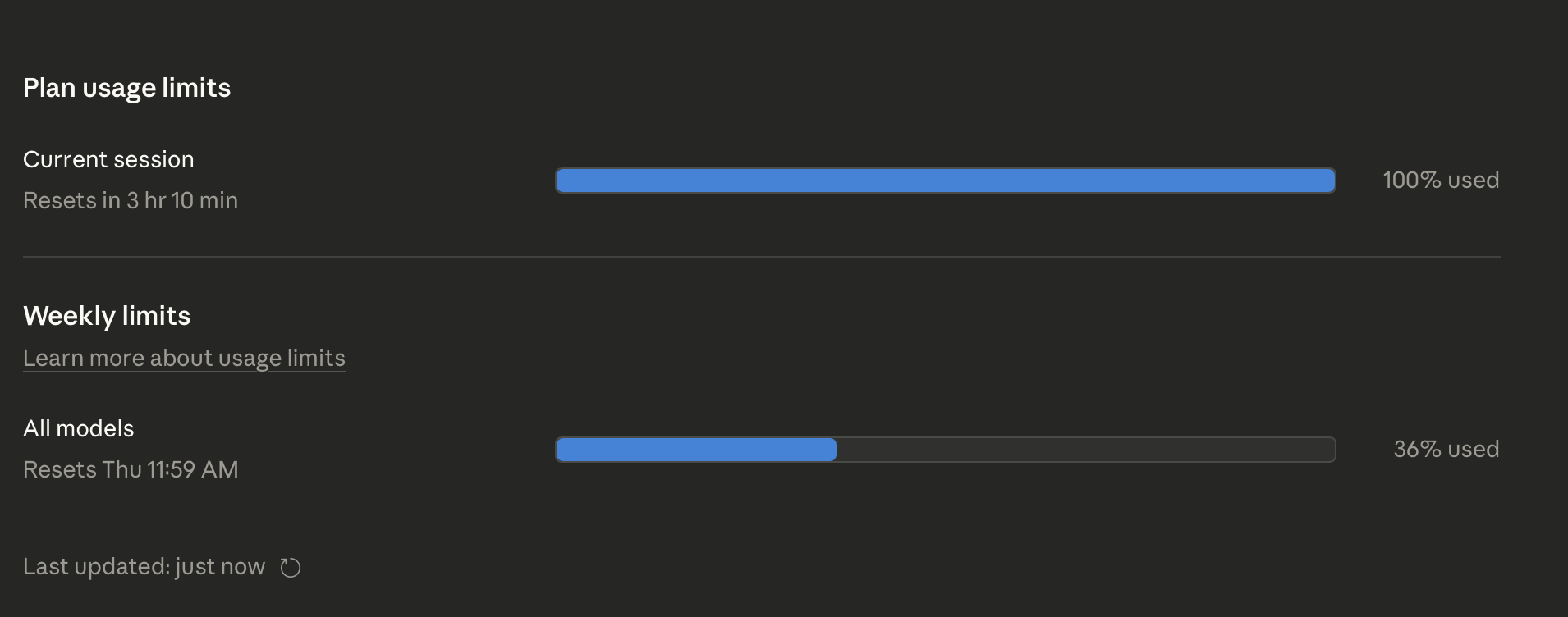
I’d already used Claude briefly that morning, designing 2 additional CRM screens for Relate, so my session wasn’t fresh.
Using Claude is a struggle with the tight session and weekly usage limits. After just playing with Claude Code for a few minutes, I get anxious about the usage limits. Because it might mean starting over in another tool halfway through. Or worse, waiting 4 hours, or days, to continue.
So I opened Codex and asked it to plan out this feature for me, and it started doing just that. And not once did I worry about hitting a limit.
Codex has much higher limits. I know they’re doubled during the launch period, but even so, I never think about them once.
People that become locked out of continuing with Claude might switch over and experience how much more generous the limits are with Codex. I’m a paying Claude user, and I got pushed to a competitor mid-task. If I’m switching, others are too. That should worry Anthropic.
Key Insight:
Having a product that you can’t use when you need it, isn’t your product anymore. This is how tools lose their users. Not in one moment of frustration, but through a slow erosion of trust. Every time you’re forced to think about limits instead of your work, the friction of reaching for an alternative gets a little less.