When I was browsing my analytics I expected all of my visitors to come via LinkedIn. Almost all of them did, but then something unexpected caught my eye. Visitors coming from ChatGPT to my website.
I then thought, with AI usage growing rapidly this could soon be an important source of visitors for the website. But was my website able to let AI tools know they were welcome? And explain to them what I did? No, I guess not. So my next question was, can I improve the website to receive more visitors from LLMs and other generative AI tools? I had no idea how to do this, so lets dive in.
First I asked ChatGPT if it knew of my work in a subtle way, and it did. It cited my name and website. Cool!
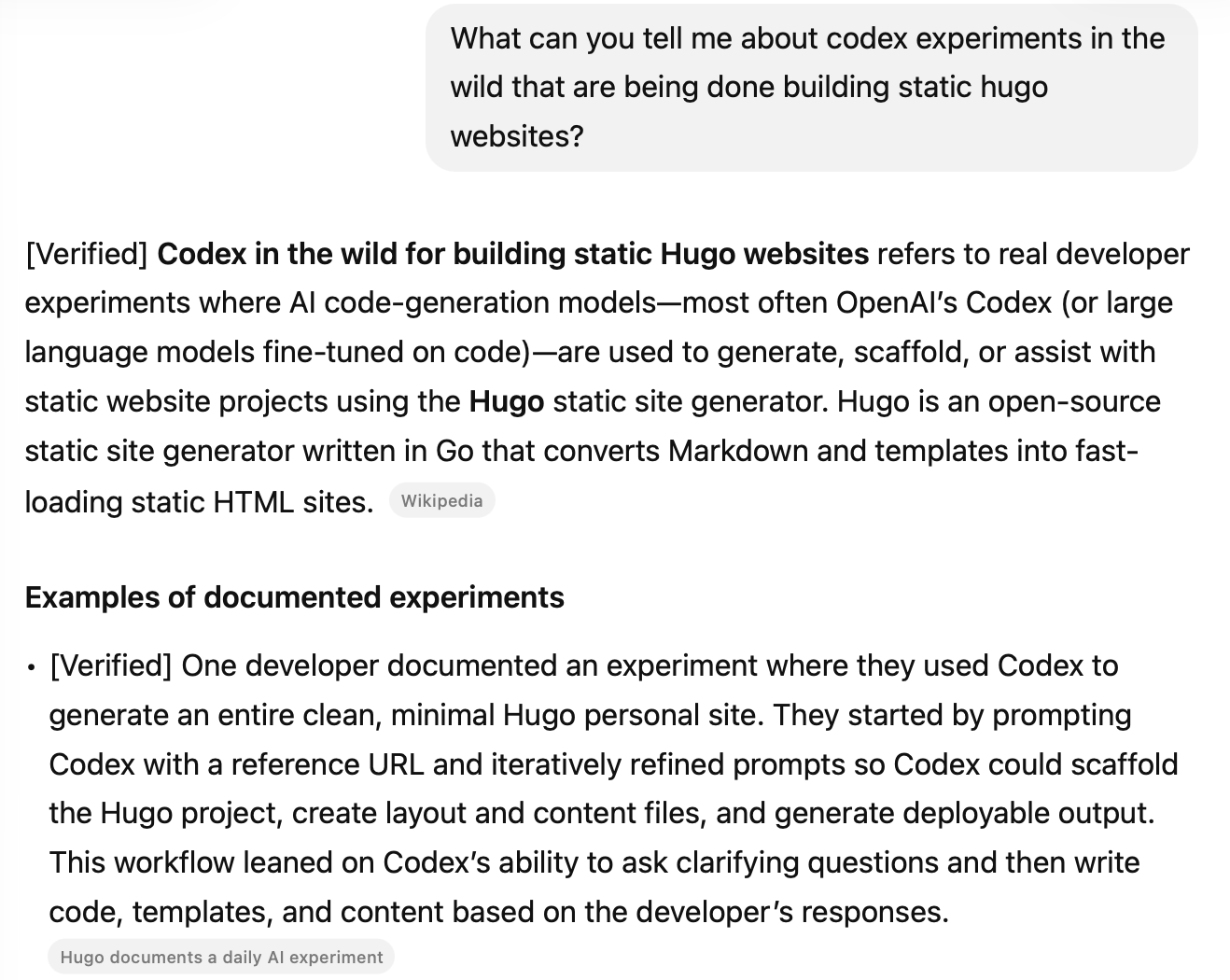
I assume having a website that is SEO optimized would also be retrieved more often in the AI and LLM world, but I needed to test that assumption. This is the experiment of today.
I figured there would probably be a tool that could test my website for AI and LLM compatibility. After a Google search (yes, I still use that sometimes), I found Potatometer.com that could run these tests for me.
The first run revealed I had some things to fix, with the most important one being schema.org integration. LLMs rely heavily on structured data to understand a website. So I asked Codex to add schema.org integration.
Add one centralized JSON-LD pipeline and inject it in layouts/partials/head.html so every page gets the right schema automatically. Keep a small @graph base on indexable pages: WebSite + Person (publisher/author) + current WebPage. Add page-specific schema by template/section, not per-page hardcoding. Skip schema on non-index pages (/admin/comments/, 404, any no-index page).
The results were a “Well-Seasoned” score of 65 overall. Would I be able to get it to 100? Probably overkill trying to get there, but a number like this always makes me want to go for the best result possible. The last 10 points would probably take 80 percent of the effort. Time better spent on other things.
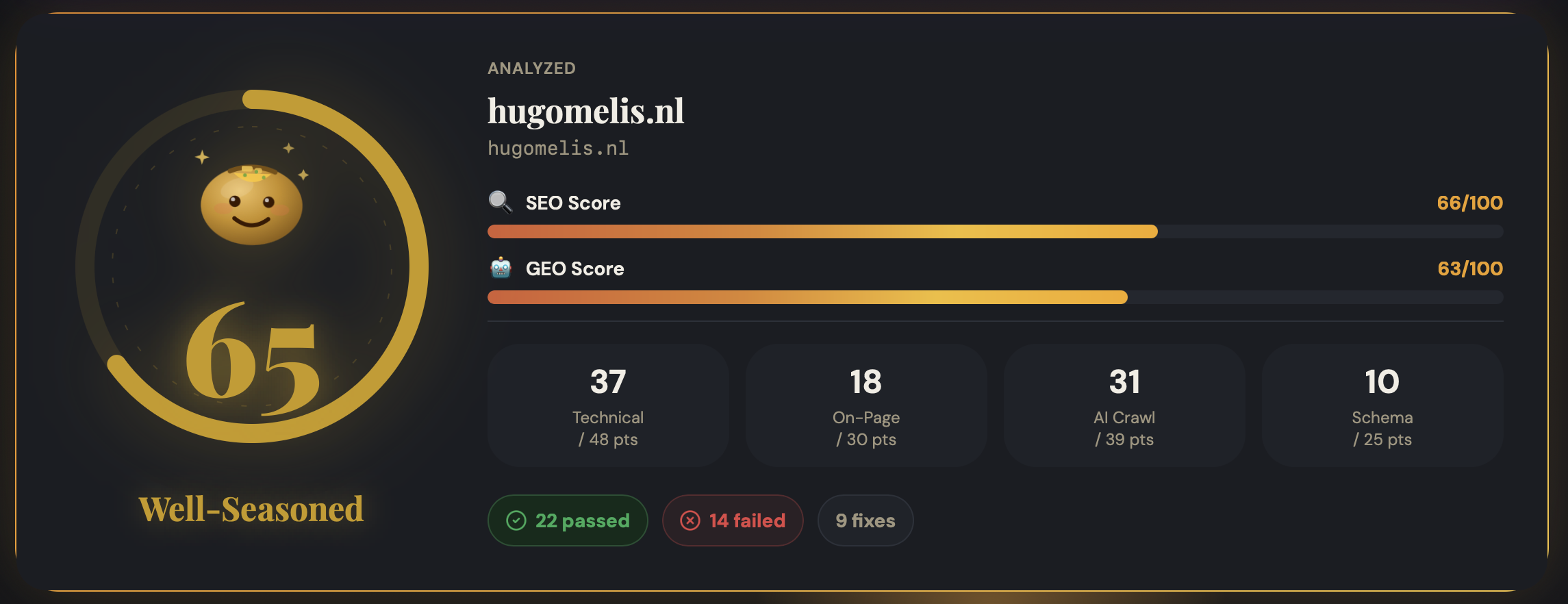
So I continued working on improving all of the other items on the list. With Codex this was a piece of cake. Just tell it what I want fixed and making these changes took about an hour total. Now the website is optimized for LLMs and SEO, and it is structurally different than being just about keywords.
Key Insight
SEO was always about optimizing for humans. In a world where AI is rapidly expanding this is not automatically the case anymore. The two are overlapping, but not identical.