I wanted to create a video to tell people about the service I started to offer: on-site help setting up OpenClaw for business owners. A niche that is interesting because people are curious about AI, but do not know where to start. So I created an account with HeyGen, currently the most used AI app for virtual avatars. Would it be good enough for me to use in my quest to automate an explainer video for my website?
However, after trying it out, I quickly ran into my first obstacle. I wanted a custom background. That is when I bumped into the paywall to upgrade my account for 25 euros to ‘Creator’. I skipped this because I first wanted to see what the quality would be.
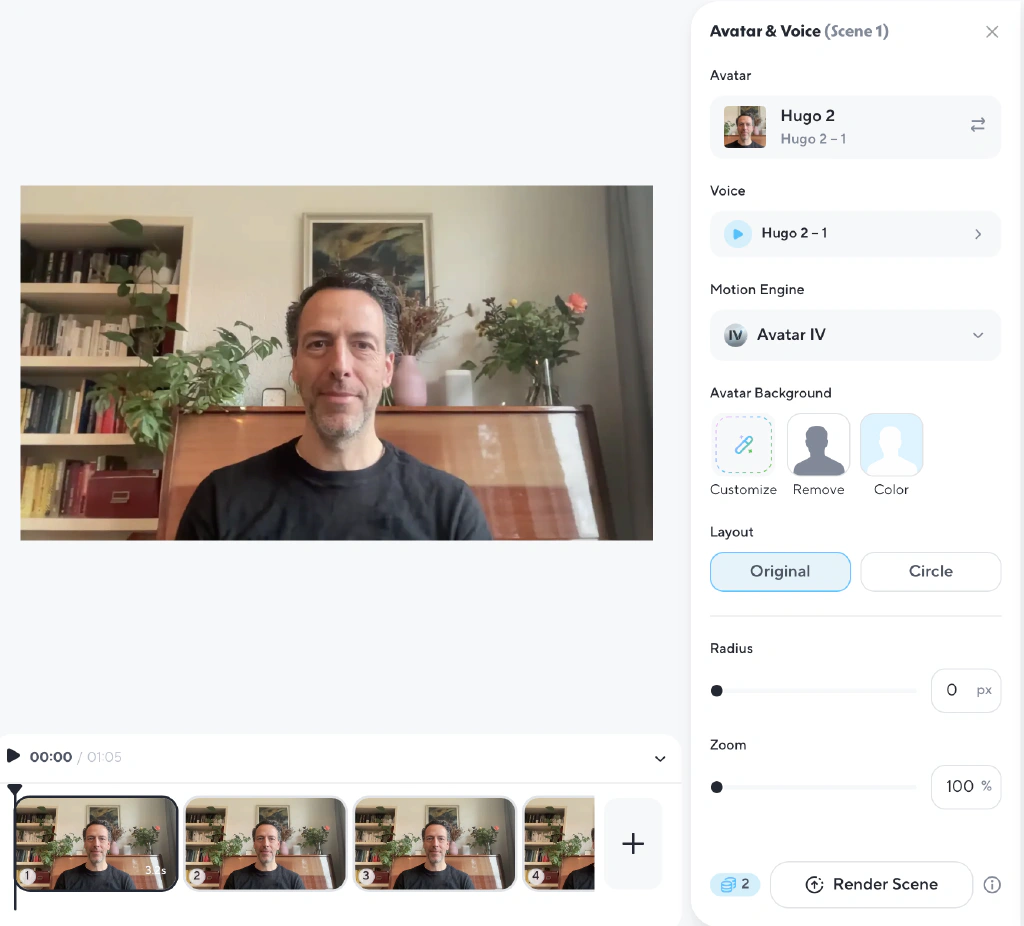
Then I ran into the next roadblock: cloning my voice was a ‘Creator’ feature. This I needed, so I pulled up my credit card and caved in. I was annoyed by the fact that I could not test a first video with most of the features. But I was under the impression that the quality of the resulting video would be top notch, as I see daily posts showcasing great AI-generated videos.
I started tinkering to make my voice sound real, but could not get it to work. The voice kept sounding fake. HeyGen suggested adding more training data by speaking for at least two minutes. So I recorded some additional minutes, but after that the voice was only marginally better. A feeling of dread came over me, as it showed me that the state of HeyGen is not much better than it was a year ago when I last saw a HeyGen-generated video.
I could try to make the video better, but I did not trust it would be worth my time and effort. Slowly I started to realize I needed a short video that could be recorded in a few minutes. It would definitely be more authentic. Authenticity matters when selling a hands-on service. It would also have a lower cognitive load on me. So I recorded a video manually without any AI tools, as this was far easier for my use case.
It revealed that automatic video creation is not good enough for me to use when making a short one-off video.
Key Insight:
Using a tool to increase leverage by introducing automation creates additional overhead and friction. Leverage has an activation cost. For small tasks, the setup outweighs the benefits and the tool becomes heavier than the work itself.