We are building a house and we have a lot of things we still need. High ticket items like tiles, wooden floor and kitchen appliances. All items that have many variants, that we don’t have a very specific preference for. I like the feeling of asymmetry, winning an auction because others didn’t look. So when I experienced the Troostwijk apps limited functionality, I saw a chance because bad search data creates pricing inefficiencies.
There was an auction for multiplank wooden flooring. Something we still needed to buy, but the items were all named: ‘mutliplank’ instead of ‘multiplank’. The search engine is literal and most bidders search correctly spelled products. It seems the name was just copied from a previous batch of flooring because it was multiple weeks of auctions that had the same spelling error.
But instead of manually guessing all the misspellings for items we still need, I figured it would be easier to setup my own Troostwijk bot to find the best deals.
After some initial tries using OpenClaw I felt OpenAI Codex was a better use case for this. So I used /plan mode for the initial plan. It asked me a loads of questions and clarifications. The better planning of Codex is really helpful if you have a limited idea of what you want and need.
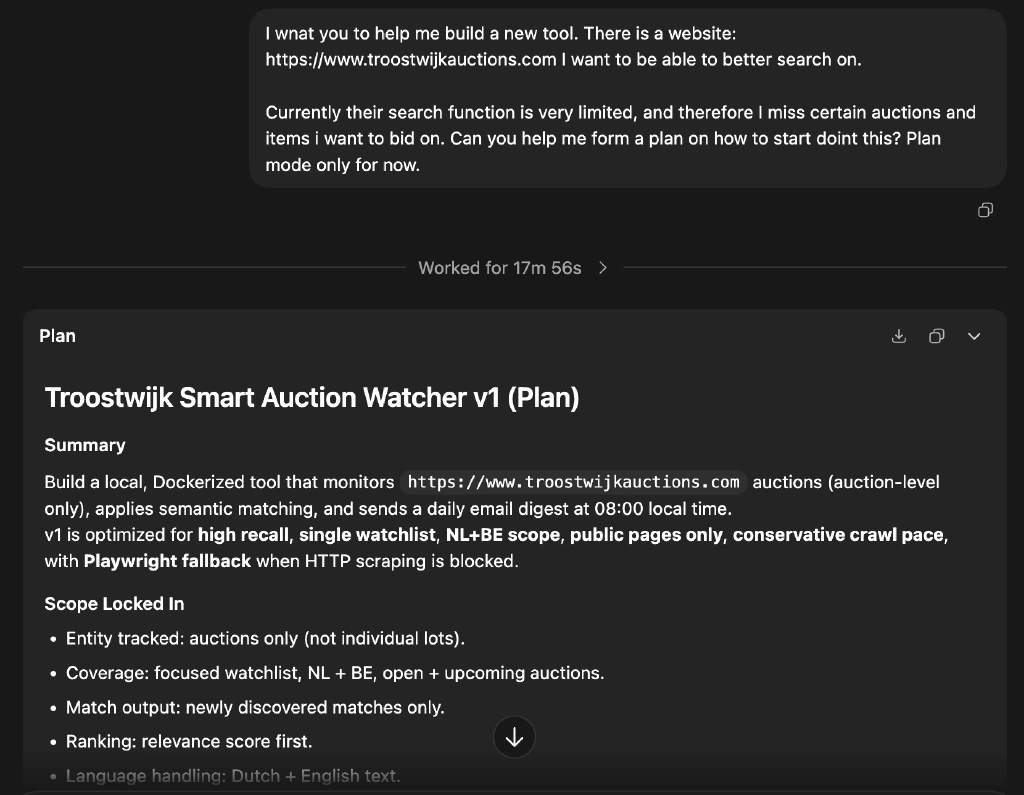
It solved for me wanting it running on my local machine, ideally separated from the rest of the computer. It suggested a Docker container, which seemed perfect so I could contain everything and my MacOs does not get littered with tools and changes.
After skimming through the plan I gave it my OK. I am starting to trust the system more and more, and feel like I don’t need to know exactly what network behavior or error handling. I trust Codex to make the right choice for me. This feels a bit odd, as I want to have control. But I am getting more comfortable in the solutions it comes up with. Removing cognitive load and replacing it with trust.
Then I had to do about 6 iterations to fix mostly environment issues before I got it running correctly. Then it started to show actual auctions from Troostwijk that contained a partial match for the bathroom mirror I was looking for. I considered this a big win as it found some things I didn’t find manually.
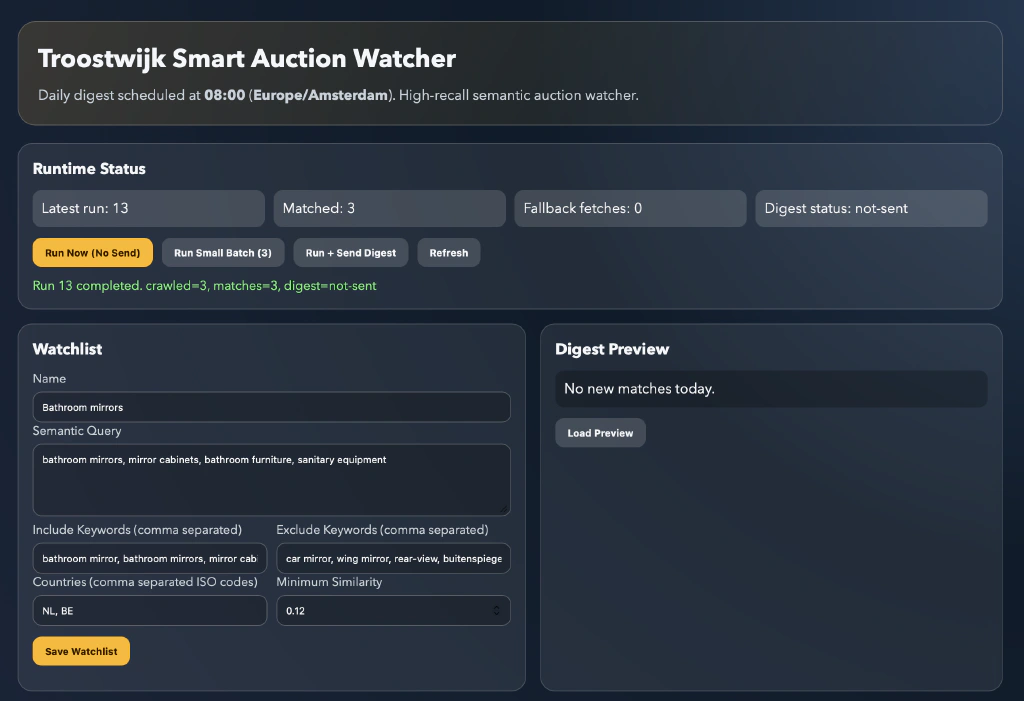
At that point in time I spent about 2 hours on this experiment and therefore I needed to start the actual writing of this piece. But I had something working. It definitely needs more polishing to make it work for my use-case. However I felt like it would be able to do this in due time. And I will follow up on this experiment in a later post.
Key Insight: As AI Gets Better, My Inspection Threshold Lowers
AI produces very detailed and structured plans. And this structure signals it knows what it is doing. As I want to reduce most, if not all, of the friction I let my guard down. I contained the environment with Docker, but not the implicit design decisions it made. I started to trust the system more and more over time. And as I want more leverage, I quietly surrender my comprehension. Leverage increases. Visibility decreases.